M
Our Materials
G
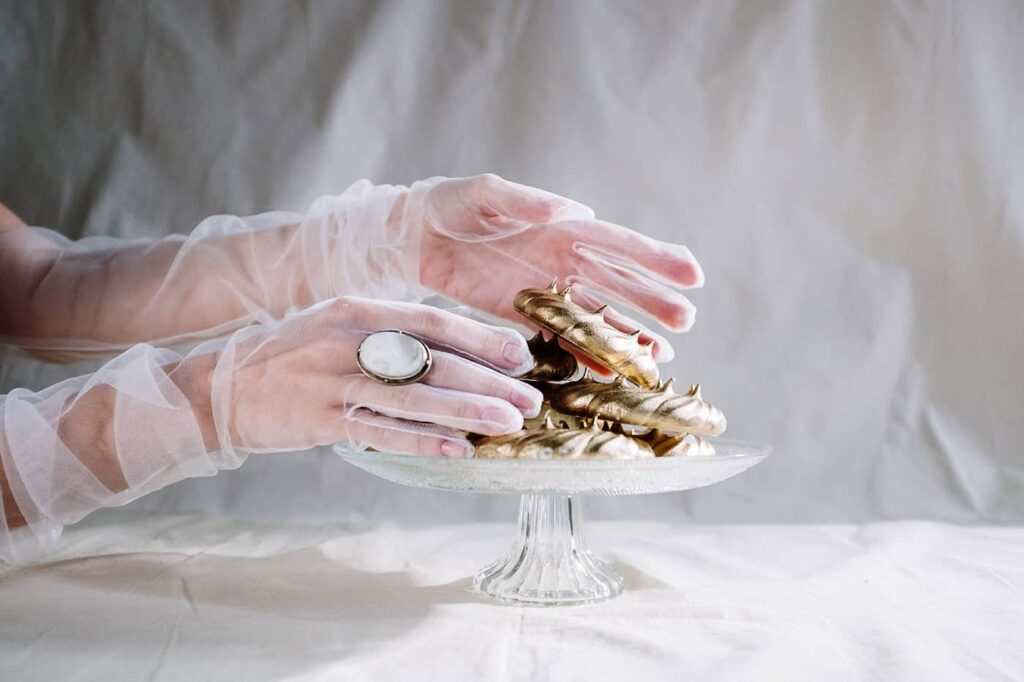
Gold
Solid gold is a precious metal that will not oxidize or discolour since it is the least reactive metal.
Colour: The high percentage of pure gold gives 18K yellow gold a rich, deep, and warm hue that is more vibrant than lower karats like 14K or 10K. The other metals can be adjusted to create white or rose gold variations.
Durability: While stronger than pure 24K gold, 18K gold is still relatively soft compared to 14K gold due to its high gold content. It is durable enough for most daily wear but may be prone to scratches or dents with rough use or manual labour.
Hypoallergenic Properties: The higher gold content means fewer alloy metals are present, which significantly reduces the risk of allergic reactions (e.g., from nickel), making it a good choice for people with sensitive skin.
Gold-plated
old-plated is very different from solid gold; gold-plated has a thin gold layer over a cheaper base metal It has composition of base metal (brass, copper, etc.) coated with a microscopically thin layer of gold (often 10k-18k). It is much cheaper, accessible for trendy styles, but may cost more long-term if frequently replaced.
D
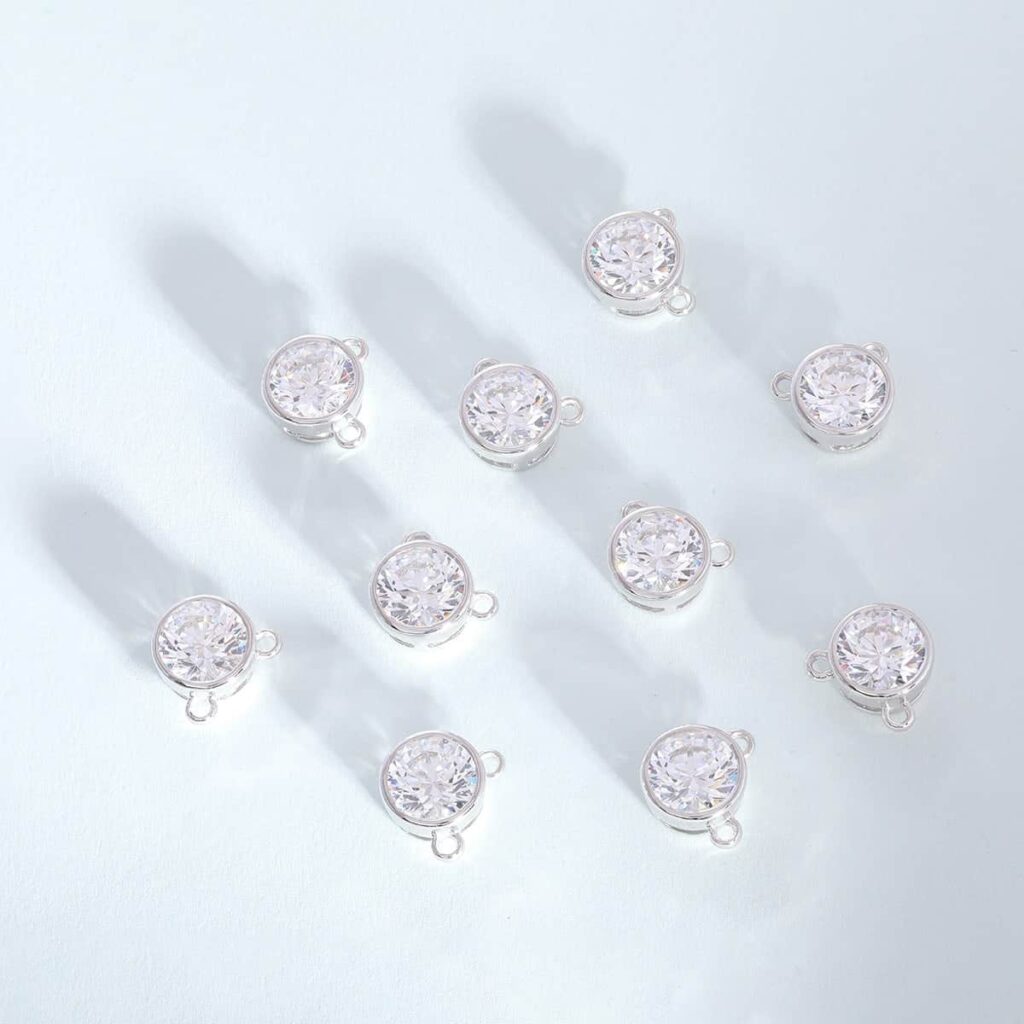
rhinestone
A rhinestone is an artificial, imitation diamond used in costume jewellery and to decorate various items, from clothing and accessories to interior. Originally natural rock crystals gathered from the Rhine River in Austria, modern rhinestones are typically made from glass, crystal (leaded glass), or plastic (acrylic or resin) and are designed to mimic the sparkle of a real diamond.
P
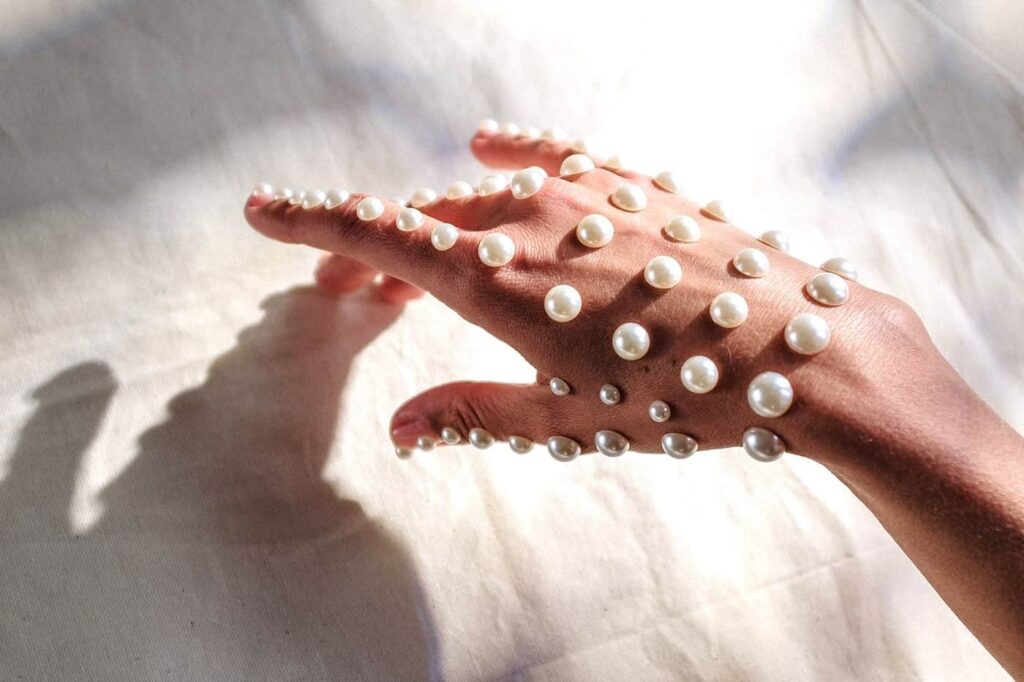
Pearls
Pearls are organic gemstones formed within the soft tissues of shelled mollusc (like oysters and mussels) as a natural defence mechanism against an irritant. They are highly valued for their unique lustre and come in various types, shapes, and colours.
Formation Process
The formation of a pearl, whether natural or cultured, begins when a microscopic irritant (such as a parasite or a piece of shell/tissue, but rarely a grain of sand) becomes trapped inside the mollusc.
Nacre Secretion: In response to the irritation, the mollusc’s mantle tissue secretes a crystalline substance called nacre (also known as mother-of-pearl). Nacre is composed primarily of calcium carbonate in minute crystalline layers held together by an organic protein called conchiolin.
Layering: These layers build up concentrically around the irritant over time, forming a pearl sac that eventually creates the smooth, iridescent gem we know as a pearl. The unique lustre and iridescence of pearls come from the way light reflects, refracts, and diffracts off these translucent layers.
Types of Pearls
Pearls are classified into two main categories: natural and cultured, which are further divided into saltwater and freshwater varieties.
Cultured Pearls: Form through the same biological process, but human intervention is involved. Pearl farmers surgically insert a nucleus (either a bead or a piece of mantle tissue) into the mollusk to initiate the process. The vast majority of pearls sold today are cultured pearls.
Natural Pearls: Form spontaneously in the wild without any human intervention and are extremely rare, making them very valuable.
Sand beads
Sand beads are a diverse category of decorative and functional components crafted from various sand-based materials, prized for their unique textures and earthy or lustrous finishes. They are widely used in jewellery making, fashion, and home decoration.
Composition and Types
Sand bead refers to several distinct types of beads, depending on their material composition and manufacturing process:
Encapsulated Sand Beads: A specialized type where actual sand from a specific location (like a favorite beach) is encapsulated within a clear Murano glass bead, creating a personalized memento.
Glass Sand Beads/Seed Beads: These are tiny, uniform beads made from fused sand (silica) and other minerals. They can be transparent, opaque, frosted, or color-lined and are the most common type used in detailed embroidery, looming, and general jewelry making. The manufacturing process involves drawing out a large bubble of molten glass into a long tube, which is then cut into small pieces and tumbled with sand and ashes to round the edges.
Natural Sandstone Beads: These are crafted from genuine sandstone, a sedimentary rock formed from compressed sand grains. They offer a rustic, organic aesthetic with natural earthy tones (browns, reds, yellows, grays) and unique grain variations. They are often used in bohemian or nature-inspired designs and are more fragile than glass beads.
Sand Pearl Beads: A hybrid material combining natural sand with powdered mother-of-pearl or a similar coating, these beads possess a soft, iridescent lustre that mimics real pearls while maintaining an organic texture.
Sand-Cement/Composite Beads: Made from a blend of sand and a binding agent like cement or synthetic resin, these beads are lightweight and moldable. They have a strong, durable, matte finish that can be painted and are popular in urban or industrial designs.
crystal Beads
Crystal beads are a type of high-quality, faceted glass bead known for their exceptional sparkle and brilliance, which mimics the appearance of natural crystal or gemstones. They are not natural quartz crystals but rather manufactured products made from a special type of glass with additives designed to enhance light refraction.
Material and Composition
The key feature of crystal beads is their composition and manufacturing process:
- Specialized Glass Crystal beads are essentially made from glass, but a special formula is used that is harder than normal glass.
- Additives Historically, lead oxide was added to the glass mixture to increase its density and refractive index, which provided the signature shine and brilliance. Due to health and environmental concerns, many modern manufacturers now produce high-quality, lead-free “advanced crystal” using different minerals and metal oxides to achieve a similar sparkle.
- Precision Cutting The material’s hardness allows for precise, sharp facets, which are crucial for maximizing light reflection and creating their renowned sparkle. These facets are typically machine-cut for consistency, as opposed to the less precise “fire-polished” method used for standard glass beads.